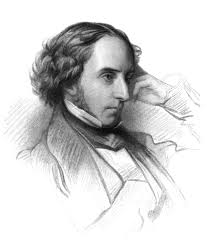
 Robert Leslie Ellis (August 25, 1817 – May 12, 1859) was an English polymath, mathematician, and classical scholar.
Queer Places:
University of Cambridge, 4 Mill Ln, Cambridge CB2 1RZ
St Mary and St Michael Churchyard, 1a Grantchester Rd, Trumpington, Cambridge CB2 9LH, United Kingdom
Robert Leslie Ellis (August 25, 1817 – May 12, 1859) was an English polymath, mathematician, and classical scholar.
Born in Bath as the youngest of six children, he was educated privately at home due to his fragile health, displaying a prodigious intellect from an early age. He entered Trinity College, Cambridge, in 1836, where he distinguished himself academically, graduating as Senior Wrangler in 1840 and subsequently being elected a Fellow of Trinity.
Though called to the bar at the Inner Temple and possessing wide-ranging interests—including co-founding the Cambridge Mathematical Journal, writing critically on the foundations of probability theory, and serving as a co-editor for the monumental Victorian edition of the works of Francis Bacon—his adult life was severely constrained by chronic physical illness and depression. Following an severe attack of rheumatic fever in Sanremo, Italy, in 1849, he spent much of his remaining years as an invalid. He died at Anstey Hall in Trumpington at the age of 41 and was buried in the local churchyard.
During his time at Cambridge, Ellis became part of the intellectual elite and was closely tied to the university's vibrant social and scholarly networks. His personal diaries and papers document deep, affectionate friendships with fellow scholars and contemporaries, notably including Alexander Chisholm Gooden (who attended Cambridge during the 1831–1841 period).
Within these circles—which overlapped with the intellectual culture of the Cambridge Apostles (the prestigious secret intellectual society)—Ellis frequently engaged in intense intellectual companionship, frequent room visits, and long walks with peers such as Gooden, Tom Taylor, Robert Jenkins, and Richard Mate. Ellis's diaries reveal that he placed an intense emotional value on these close friendships, maintaining a strong sensitivity toward how actively they were sustained.
While Ellis engaged in a brief courtship with a daughter of Sir William Napier during a period when he contemplated entering Parliament, the relationship ended in confusion, and he ultimately never married. Historical and biographical evaluations of early-Victorian homosocial bonds—particularly within elite groups like the Cambridge Apostles—frequently examine the deep, emotionally intense, and romanticized friendships shared between male peers. However, explicit modern categorizations regarding LGBTQ frameworks do not form a formal part of the historical record concerning his personal life.
References:
 The Cambridge Apostles, 1820-1914: Liberalism, Imagination, and Friendship in British Intellectual and Professional Life 1st Edition by W.C. Lubenow |
Other references:
Support this project
This website is a passion project researched, developed, and funded entirely by me. If you find the content valuable and would like to help support the ongoing research and hosting costs, any contribution is deeply appreciated.
Thank you for keeping this independent resource alive!
My books on Amazon: Elisa Rolle's books